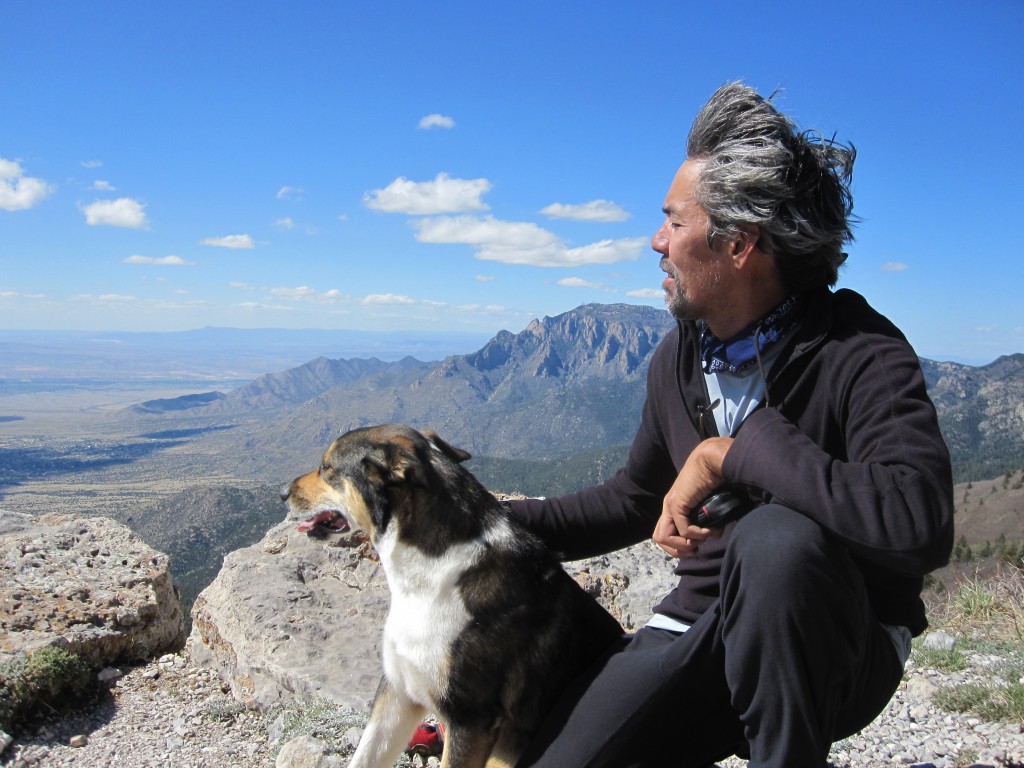
About Alex Limkin

I was born in Chicago in 1972. My mother was a Catalan; my father was Filipino-Chinese. I enlisted in the U.S. Army in 1990 at the age of 17 with a GED. Over the next fifteen years, I served on active duty and with Reserve and National Guard components in Military Intelligence, Field Artillery, Infantry, and the JAG Corps. Following completion of the Infantry Officer Basic Course, I attended Airborne, Ranger, and Air Assault School. I received a B.A. from New Mexico State University in 1997 and a J.D. from the University of New Mexico in 2004. My last tour of duty was in Iraq from 2004-2005, when I was mobilized in support of the Multi-National Security Transition Command-Iraq (MNSTC-I) and served as an infantry captain with the 98th Division. While assigned to Counter-Terror/Special Operations, my commander, Colonel Ted Westhusing, shot himself over the corruption and human rights abuses taking place. His death changed me forever.

Rio Grande Vision: Turning a “Hidden Ecological Jewel” into Dust

Reposted from New Mexico Compass


By Alex Escué Limkin & Rebecca Limkin

—Summer 2018

I sit with my son on my lap overlooking a dusty depression, a swath of brown erosion bordered by thorny Russian olives and dense saltcedars. “What is this place?” my son asks me.

“We used to call this place the Bosque,” I reply. “I brought you here to help you imagine what this used to look like, and why we try so hard to protect the patches of wild nature that still remain.

Photo Credit: Driving in Heels via Compfight cc

Photo Credit: Driving in Heels via Compfight cc

“Before you were born, your mother and I would take walks here alongside the Rio Grande in the shade of the cottonwood trees. We would park just off of Tingley Drive or by the BioPark and wander into the woods. There were many small trails, and we were familiar with all of them.

“There were no cars here, no sirens, no machinery, no boardwalks, no asphalt. We could take off our shoes and cool our feet in the water on hot summer days and feel like we were in the middle of a wilderness—even with the road just a few hundred feet away. The parking lots didn’t intrude into the Bosque, and there were no paved paths, trash cans or restrooms alongside the river. This all used to be trees, and the trees were filled with wildlife.” I waved my arm behind us.

“There were hundreds of different water birds and other animals that sheltered here: migrating geese and ducks and cormorants and herons and egrets, not to mention beavers and porcupines, muskrats and fish.”

“What happened?” my son asks.

“A mayor called Berry thought that the Bosque was not being used enough, so he hired a team of advisers to come up with what they called ‘improvements.’ The team decided that by building parking lots and bridges, boat launches and restaurants, people would come and spend money here.

“The mayor believed people wanted convenience and entertainment from the Bosque, not wildness or to feel the natural world around them. He seemed to think that people were afraid of touching the earth with their bare feet.”

“Did it work?”

“On one hand it did. More people came in their cars to buy things, but it lasted only a short while.

“The very year the mayor proposed his plan, the city fire department restricted access to the river because of the threat of fire. In the same year, the entire region was in a historic drought. There was little snowpack, and we hadn’t had our regular monsoons.

“Despite that, the mayor forced his development onto the Bosque, bringing huge earth-movers and dump trucks that ran for months, laying down tons of concrete and destroying habitat. A spark from one of the vehicles caused a fire that ravaged the area. The only trees that survived are those that can withstand fire, like these saltcedars.

Photo Credit: jared via Compfight cc

Photo Credit: jared via Compfight cc

“After awhile, no one wanted to come here anymore. The wildlife fled or starved, and the remarkable feeling of being in a wilderness within a city, the feeling that your mother and I loved, was gone. That’s why it looks like it looks today.”

“Didn’t anyone try to stop him?”

“We did what we could. We attended meetings, we wrote letters, we called his office, we chained ourselves to a cottonwood. Our neighborhood association, and many others, signed resolutions opposing his plans. But in the end, the mayor won.  This is what his victory looks like for the Bosque.”

We stood up, pulled the tumbleweed thorns from our shorts, scowled at the boat launches tilted in the dry riverbed, and headed home.

*****

For more information on Mayor Berry’s plan, see riograndevision.com

Register your opinion at townhall.cabq.gov

Or contact the Mayor’s Office at 505-768-3000 or theplan@cabq.gov.

Veterans and Dogs

Why are veterans and dogs such a good match? For one, they share a lot in common. Dogs are known for their loyalty. So, too, are veterans. Dogs are tough and energetic. This is often the case with veterans. Dogs are empathetic and affectionate and possess senses that eclipse our own, and live in a world that is largely unknowable to us–yet they do not judge us. This is often what a veteran needs, as veterans often feel their world is separate and apart from the society they inhabit. Dogs listen to us when we need listening to. They will sleep at the side of our bed and not mind if we reach out to them in the middle of the night and hold them close. They will go to the ends of the earth for us and with us. They will love us. They will return our affection a thousandfold. They will reawaken our heart if it is numb or asleep. They will remind us to care for them just as we must care for our own heart and spirit. They will embody the spirit that needs tending. They will help us to live with our past and make our lives more joyful. For these reasons and many more, dogs and veterans are a good match.

After receiving a couple requests for guidance on training from other veterans, I am prepared to offer up what I have learned. I have a lot to say on the subject. The first thing I want to address is suitability and commitment. Many veterans get connected with dogs that come to them already trained. There are long waiting lists for these dogs, and if you can afford to wait, perhaps this is your best option. Other veterans go through training programs with their dogs. There can be long waiting lists for these programs as well. Regardless of how you get connected with your dog, you have to commit to that animal with all your heart and soul. If you don’t think you want to do that, or if you’re not ready for that, just wait. If you are numb and indifferent to life, start with baby steps.

Skywalk 408

My own experience started with Listening Horse, a horse therapy program in Santa Fe. In that program, I was not responsible for the health and welfare of the animals, so I was not a risk to the animals. If you get a dog and you are unable to commit to it, unable to care for it, unable to be responsible for it, then you are just making things worse. It is bad enough what you are enduring, but as a first step you should strive to not inflict additional suffering on others. So baby steps. Start with hanging out with birds in the park, or ducks and geese at the pond. Or horses like at Listening Horse. Wait until you feel a kindness in your heart to these animals. Wait until you feel some kindness in your heart to the trees. Wait until you feel some bloom in your heart for life. Wait until you can sit on a park bench and feel some empathy for a dirty pigeon with a busted wing. Then something will come to you for you to love and care for that will embody your own spirit and serve as a spark for your own healing.

I cannot stress enough, if any doubt exists about your readiness for a dog in your life–whose welfare you must be wholly committed to–then start with an organized program, such as a horse therapy program, where you are not responsible for the health and welfare of the animal. Let a professional work with you and assess your progress over time.

When I was told by Listening Horse that I should “get a horse,” this showed that I was not only responsible enough to be trusted with another being, but that an animal companion could continue to be of great assistance to me. This cannot be said of everyone, but once those words were uttered, everything seemed to fall into place. Wait until you are in a place in your life where a person who knows and loves horses, or any other wild beasts, can openly advise you to “get a horse.” This will mean that the time is right.

Part of our ability to bond with animals is through our empathy, being able to share in the life experience of others, not just humans. For many veterans, our empathy has been laid to waste. We have had to cauterize our empathy in order to function and accomplish our mission. To live without empathy is a dark prospect, but many do so, and many do so who know nothing of war or pain or darkness or suffering.

These words and this guidance are for those for whom even a few blades of grass possess a sacred meaning, those who have lost their way and struggled, those who have known loss and pain, those who wish to come back into harmony, who seek harmony, who wish to not be the cause of more pain but the cause of joy.

If this applies to you, please continue reading.

All aboard on the way to South Capitol

All aboard!

The following are not firm rules, but rough guidance. From a practical standpoint, a veteran’s dog should be anywhere from 40-70 pounds. Since this is an animal that will be traveling with you, never leaving your side, a very large dog, such as a mastiff or great dane, is not a good choice. Likewise, very small dogs, toy dogs for instance, are often neurotic and unmanageable. The last thing a veteran needs to be around is a yapping dog.

Breed is important as well as size. Dogs bred for aggression and fighting should be avoided. If your desire a pit bull or rottweiler or akita so you can menace people, and keep the world at bay, you are not ready for a dog and this guide isn’t for you. Spend some more time in the park. The key to a good dog for a veteran is a gentle spirit. This does not mean a dog that doesn’t know how to defend itself, or come to your defense, or be alert and watching out for you. But dogs that have been bred for aggression and fighting are a poor choice. For this reason many gentle breeds, such as labs and retrievers, are paired with veterans. They are especially good with children and the public. Personally, I like a mixed breed, commonly known as a “mutt,” because they tend to not suffer the ills of inbreeding that many breed dogs suffer from. Be that as it may, you may not have a say in how your dog comes to you. And, if it is a pup, particularly a mixed breed pup, it may be difficult to estimate its eventual size and disposition. The key is that you feel a bond with the animal and you commit yourself to her, and you stick by her.

Good trait to look for in a puppy: thoughtfulness. This can often be observed by how the pup deals with a strange situation. Does it sit down and seem to study what is happening? Or does it just blunder into any situation? The more thoughtful the animal, the better. Many veterans who could benefit from a dog have poor judgment and are given to impulsiveness. A thoughtful companion that looks before it leaps is a good choice to compensate for this.

IMG_2579

Female or male? Again, no firm rules, but I prefer a female. Why, I don’t know. Maybe it is just my imagination that they are less aggressive and more nurturing, but even if the bias is nominal, it is still worth considering. Again, how the dog enters our life may be outside of our control. Male or female may be immaterial. The main thing is that we commit fully to the animal

Training can begin as early as 8 weeks. One of the reasons it is wise to seek a formal training program is that typically veterans are hard-pressed to summon the patience that the job requires. They may be prone to a violent temper and easily frustrated. Losing your temper at your animal is outrageous and must be avoided at all costs. When you consider what your assistance animal is capable of in terms of helping you, and when you consider how damaging are the forces of distrust and betrayal, you will be wise to use every coping mechanism at your disposal to NEVER LOSE IT with your animal.

Training takes time. It takes patience. It takes commitment. It is often said that training never ends. Even when your dog is out and about in the world with you, it is always in training. Although it is easiest to train a pup, a patient and persistent trainer can make good headway with older animals. For this reason, there are training programs for veterans that only work with rescue dogs from animal shelters. If you are interested in going this route, and you are unable to wait for a slot in such a program, see if a dog training organization in your area will at least assist you in making an appropriate selection at your animal shelter.

Critical commands to focus on in the early going are “DOWN” and “STAY” and “COME. In fact, if these three commands are all the commands your dog ever learns, you will be in good standing. You do not have to bark orders at your dog. When you are out in the world, you will want to communicate with your dog in a subtle and peaceful manner, sometimes even in a whisper. Oral commands should be augmented with hand signals. The hand signal for “DOWN” is crouching at the level of the dog and pointing the tips of your fingers with an open palm to the ground. Accompany this hand signal with the verbal command, “DOWN.” Draw out the command so that instead of being a curt command, is sounds like a insistent plea: “Doooowwwwwn.” Initially, no dog will obey you. Going into the down position is a submissive posture. If you observe dogs, you will see when one dog wishes to show passivity and submission to a larger or more aggressive animal, it will grovel and go into something of a down position. For this reason, this is a difficult command for your dog, or any dog, to submit to. For this reason, you will have to complement your commands, initially, with a corrective training collar.

I recommend a plastic collar such as the StarMark plastic training collar. These collars comes in two widths, one for puppies and juveniles, and one for larger dogs. Depending on the ultimate size of your dog, you may be able to merely add links to the small width collar as the dog grows, or you may need to eventually work into the larger size. In any event, links in the collar must be added or subtracted so that it fits correctly at all times. A correct fit should allow several fingers to fit under the collar when it is being worn, yet allow the “teeth” of the collar to be felt when the collar is tightened with a quick tug. This training method may seem cruel, but when done properly, it mimics the corrective nip that a mother administers to her pups when she is raising them. If you have a doubt about the amount of force that you should use (it is a quick and deliberate tug that is desired, followed by an immediate release– NOT a sustained tugging) I recommend that you put the collar on your arm or leg (or even your own neck) and give a few tugs in order to familiarize yourself with what it feels like and the amount of force that seems reasonable. If it hurts some, but not much, (i.e. enough to get your attention), it is probably right.

Note: Any type of training collar you use must ONLY be used during training sessions and under your close supervision. ALWAYS REMOVE THE COLLAR AT ALL OTHER TIMES FOR SAFETY AND COMFORT!

It goes without saying: start with the least amount of force you think is necessary, and then gradually increase using the reaction of the dog as a guide.

Training sessions must be LIMITED in time! Dogs learn best when training sessions are short and immediately followed by play activity (fetch, running around the yard) as a reward.

The last thing you want to do is expect too much too soon, or to keep drilling your animal when they have tired.

5 MINUTES PER DAY IS PLENTY FOR THE FIRST 6 MONTHS!

Try to conduct this training as consistently as possible. This training can be incorporated into your daily walk routine. If you do not already know this, a well-adjusted dog needs to be out and about as much as possible, and not left alone for significant periods during its developmental phase,or any phase for that matter. At a minimum you should plan on walking your dog at least once per day for no less than a solid hour. As your dog, even in this training phase, will be out and about with you, they should be getting adequate exercise and stimulation. Even so, walks are necessary; a dog must interact with and monitor its environment–including other dogs–to be well-adjusted.

A sample training routine for a 10-week old pup could be as follows:

Take the pup to a consistent place. Initially you will want a place with little or few distractions (but not necessarily your backyard). Then, over time, you will want a place with increased distractions, so your dog will have to face those additional challenges while still paying attention to you. Remember, as your dog’s training improves, they will be able to deal with high levels of distraction while still obeying you (i.e. remaining sitting or lying down in any place of your selection while cats go by, clown cars, trains, etc.)

The reason you may not want to use your backyard is that you want your dog’s living area to be associated with only good memories as much as possible. Because training does involve some correction (i.e. mild punishment) it is nice if this can be done not where you live. (Although once your pup starts to catch on, i.e. 2-4 months into training, it is perfectly appropriate to give commands at home as well.)

Authorities are divided on this but I recommend NOT using treats as a training device. Not only is it unhealthy to have a lot of treats, but the dog tends to focus on the treats, and the treats themselves become a distraction. Needless to say, in the real world you will not be going around passing out treats to your dog every time it obeys a command. What works better is a quick “Good dog!” and something of a affectionate pat. Be consistent and judicious with your praise just as you are consistent and judicious with your punishment.

IMAG1413

Initially, when the dog knows nothing, you will have to lean more heavily on correction. For instance, you will give the “DOWN” command (hand signal and voice) and the pup will just look at you. How should she know how to act? At this point, and nearly contemporaneously with your command, you will then give a quick firm tug on your lead so that the pup’s head is drawn towards the ground (you can initially then use your hands as needed to get the pup into the down position, drawing out on its front legs, etc.) Starting out, this lead can be just a short piece of 550 chord, 3 or 4 feet is plenty. A lead just long enough for you to be able to tug (4-8 inches) is also appropriate, but will usually be used after you have already made some progression in the training. Earlier on, the longer lead will give you more control. The pup will likely resist you. DO NOT LOSE YOUR TEMPER AND START MUSCLING AND JERKING YOUR PUP AROUND! Remember, your relationship with your animal is about trust and loyalty. It takes time for a dog to learn what it is you want and expect of her. This training is to assist you in moving about the world with your dog. The training is necessary because in order to accompany you in the world, the dog needs to be well-behaved and listen to you. Otherwise, instead of being a calming element, your dog will be a source of anxiety, and even a nuisance and a bother.

Since obeying you does not come naturally to the dog, but must be achieved through consistency and patience over a period of weeks and months of concerted effort, do not expect much for the first handful of training sessions. It is enough that the pup hear and see the commands, and get used to the sound of your voice. Keep in mind that most dogs will want to please you and will learn these basic commands to earn your praise. But this takes time and effort for everyone involved: 1) the dog, through trust and kindness, needs to come to value your praise and 2) needs through time and repetition to come to understand the various behaviors that your commands are meant to elicit. ALL THIS TAKES WEEKS AND MONTHS!

After the training session is over (which might consist of only 5-10 iterations of “DOWN”, with a brief interval of walking between iterations–so the dog is not just getting up and getting down in the same place) it is important to reward (and relax the dog) with a nice play session. Over time, your dog will associate the training session with the play and start to handle the training with greater forbearance and patience, knowing that its patience and effort will be rewarded. Again, this reward does not have to be treats, but a few throws of a stick or ball.

The “STAY” command is very important, and is often trained in conjunction with (and directly following) the “DOWN” command: The hand signal that accompanies this command can be an open palm facing the dog. Initially your dog will not obey this command. When she gets up and moves, lead her to the same spot she was in, and give her a quick corrective tug on the lead. Over a period of weeks and months, the amount of time that the dog can be left in this position will increase. But increase the amount of time slowly and over time. Ten to fifteen seconds in the first month can grow to twenty seconds in the second month and so on. Eventually you will be able to leave your dog in the DOWN and STAY position for an hour or longer. But work up to this slowly and methodically!

(It is important that a correction be delivered close in time to the infraction. It does your dog no good to correct her if you gave her a STAY command and then just left her, and then a half hour later realized that at some point she left the spot where you had ordered her to stay and wandered off to some other place. For this reason, during a training session, you may wish to spy on your dog from a window or through a door jamb so that if and when she gets up and starts to wander off, you can make the appropriate correction IMMEDIATELY.)

REMEMBER: 5 MINUTES OF TRAINING PER DAY FOR THE FIRST 6 MONTHS IS PLENTY!

Every dog is different, just like people. Do not assume that just because one dog learns something in a day, that this will be true for all dogs. If you wonder if you are demanding too much of your pup: STOP! Take a break. Walk away. Every dog is capable of learning, just is every person, but you must be willing to meet the dog on her own terms, work around her own personality and disposition, and RESPECT HER!

Cornmeal ceremony at Westhusing's Bluff

Westhusing’s Bluff

What Listening Horse taught me is if you want something to just do your bidding any old time, get an ATV. If you want to know a horse, you have to come to the horse on the horse’s terms. If you want to know a dog, likewise.

In the end, I think I was fortunate that the training program that was available to me had a two year wait. It forced me to become proactive and take some initiative. I pieced material off the internet and from books and came up with my own training program. The reality is, I didn’t have two years to wait around for an opening.

Not covered in this article is crate training, which I highly recommend for house training your pup. Additionally, the crate (with a cloth or blanket draped over it) can serve as a safe and comfortable refuge for your dog. To this day, AB takes her meals in her crate, and I know it is mealtime when she goes in there and lies down.

If at all possible, put in a doggie door wherever you live. A dog cherishes the ability to come and go as she pleases.

Be aware that your dog is really a pup for the first two years of life. Do not have overly high expectations for her. Adjust to her. Make allowances for her. Give her some room for error. She is there not to absorb your damage, but to help you cast it off as best you can. Let her be her wild spirit. Take her to the mountains and let her run free.

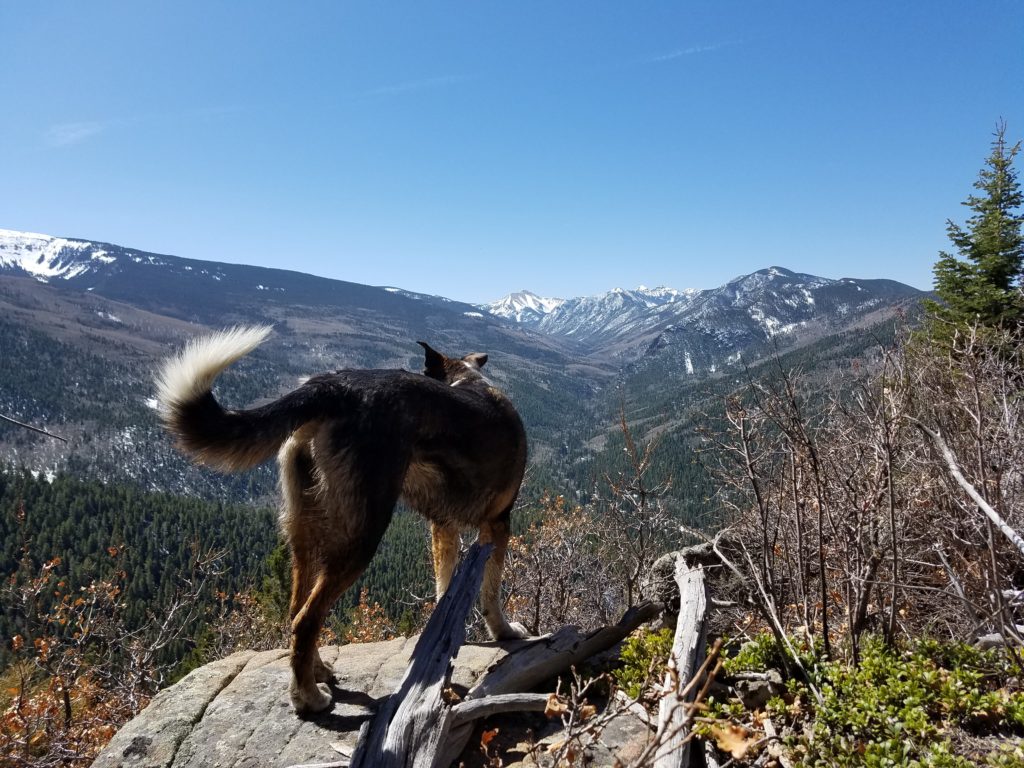
Abigail on a rock 7 miles out of Tunnel Springs

Let her be free as often as you can. Don’t put a jingly jangly collar on her. Don’t put any sort of collar on her outside of training. Let yourself run free with her. Beside her. Not leading or controlling, but beside her, like any other wild thing. Care for her and be good to her, watch out for her paws just like you would your own feet, carry a tweezers for thorns and splinters if you are out and about, carry water for her and offer her water often, let her pant and rest in the shade if you are on a trail in the hot sun, take joy in watching her joy, take joy in greeting her in the morning, take joy in sharing with her small scraps of your own food (letting her lick your dish clean for instance, placed in her crate though–don’t feed her from the table as this encourages begging). Share with her the good of her life, and she will assuage the bad of yours. She will calm you when you are upset, comfort you when you are bereaved and lost. Whatever hills and valleys yet lie before you, she will go through them at your side, loyal and steadfast.

Good luck.

AB

Hunting Lions in the Sandias

Photo Credit: Wisconsin Department of Natural Resources via Compfight cc

REPRINTED FROM NM COMPASS

Photo Credit: Wisconsin Department of Natural Resources via Compfight cc

By Alex Escué Limkin

— We had just finished hiking and were taking a picture of our baby Escué lying in a snowdrift on the east side of the Sandias when the hunter came out of the woods carrying a crossbow.

His white luxury SUV had been at the trailhead when we arrived, partially blocking the entrance. After opening the rear hatch with his key fob, the hunter slid the crossbow into the cargo area, took off his camouflage clothes, and sat down. I could see that even his underwear was some form of camouflage. He started his engine but did not leave his parking space.

“I’m going to go throw a stick for AB,” I told my wife. I moseyed over to the SUV with my canine companion in tow.

The hunter was studying his phone. I squeezed past his car and looked around for a stick. There was one near his front tires. It looked like it had broken and fallen from the weight of the snow. I made a show of throwing the stick for AB a couple times.

I had just been on the trail with my wife, dog and infant son, and I didn’t like the idea of someone hunting so close to us, lurking around, stalking. What was he hunting up there in the Sandias with a crossbow, anyway? What was up there that needed killing?

After a couple throws, I gestured to him and he lowered his window. This is how I remember our conversation:

“Can I ask what you’re hunting up here?”

“Mountain lions,” he said. I nearly dropped the stick.

“Mountain lions? Really? I didn’t know there were any still up here. Thought we killed them all.”

“Oh, they’re up here.”

“The reason I’m asking,” I continued, ”is because there’s a lot of families hiking up in these woods. Like me. With their dogs. It would be a tragedy if you made a mistake out there with that crossbow.”

“Anyone who would make a mistake like that has no business hunting.”

“True,” I said, “but it happens. Like when Cheney shot Rumsfeld in the face with a shotgun.”

The hunter didn’t blink. “I don’t know anything about that. Didn’t kill him, in any event.”

I fished around for a way to continue the conversation. There were so many things that needed saying. “You sure there are mountain lions up here?”

“Oh, they’re up here. There’s a 30-bag annual limit in the Sandias. But they don’t permit firearms. That’s why I’ve got the bow.”

I wondered who regulated and tracked mountain lion kills.

“What do you do to hunt them?” I asked.

“I got a call. I make a call just like a mountain lion makes, and any mountain lions in the area will come around and check it out. They’re territorial and don’t appreciate intruders.”

“Any luck with that?”

He shook his head. “Just a matter of time, though. With hunting, you have to be patient. Sometimes you wait your whole life for just one shot.”

I didn’t want to be there all day talking hunting, but I wanted him to know he wasn’t welcome with his crossbow so close to the city, with families and children around. I didn’t care if it was legal or not. But it had to be done delicately.

“Maybe there are some better places you could go than the Sandias,” I offered.

“There are, but I live in Albuquerque, and this is the closest place to hunt what I’m after.”

The truth is, it wasn’t only the safety of my family I was concerned with. I was thinking about the mountain lions, too. I was thinking about the bison and the carrier pigeon. I was thinking about how willing we are to kill wild things for entertainment, for sport, for pleasure or for economic growth. It has always been this way with us. I felt sick to remember the bison, the millions left to rot on the plains. And here we were, still at it. Still finding pleasure in killing. Still denying the sanctity of life.

I was going to launch into the story of Aldo Leopold, the conservationist who founded the Gila Wilderness. He hunted wolves until one day he reached a wolf in time to see the “fierce green fire dying in her eyes.” He never hunted again.

I wanted to tell him that many animals shot and wounded by hunters, particularly with bows, are never found, and are left to die a slow, agonizing death in the woods.

I wanted to tell him that once a bullet or arrow severs your spine and paralyzes you, you’re never the same hunter again.

I wanted to tell him that once you’ve been wounded in the way we wound animals, you’re never the same human being again.

But there is never enough time to tell people the things they need to know. And often, they don’t care.

Anyway, it was what I wanted to do and not what I wanted to say that was important. What I wanted to do, as soon as I saw what he was up to—desecrating life for sport—was break his crossbow over his head.

Instead, I used words.

“If you manage to find a mountain lion out here, or anyplace else, I hope you see a green fire in its eyes that changes your life forever.”

Then, there wasn’t anything more to say.

*****
Author Alex Escué Limkin is forming an action and advocacy team, DVR-6, specializing in the recovery and aid of homicidal and suicidal veterans in the backcountry. He blogs about his experience as an Iraq veteran at warriorswithwesthusing.org.

Wilderness First Responder Takes Action…Virtually On Himself

IMAG2252

There were several reasons why I thought it would be a good idea to get my Wilderness First Responder certification. For one, I wanted to see what it would be like to learn how to save lives, as opposed to the opposite.

Secondly, I knew that any work involving distressed veterans running loose in the backcountry would be dangerous, and having this certification would likely be a prerequisite to work in the field.
And lastly, I spend so much time alone and out of contact in remote terrain, that the knowledge and ability to administer self-aid seemed really, really important.
Anyway, I was able to identify a program offered by the Wilderness Medicine Training Center and hosted by the Outward Bound School in Leadville, Colorado. It was a good choice. By day we did coursework and went through involved and realistic incident simulations outside in the snow.
IMAG1866
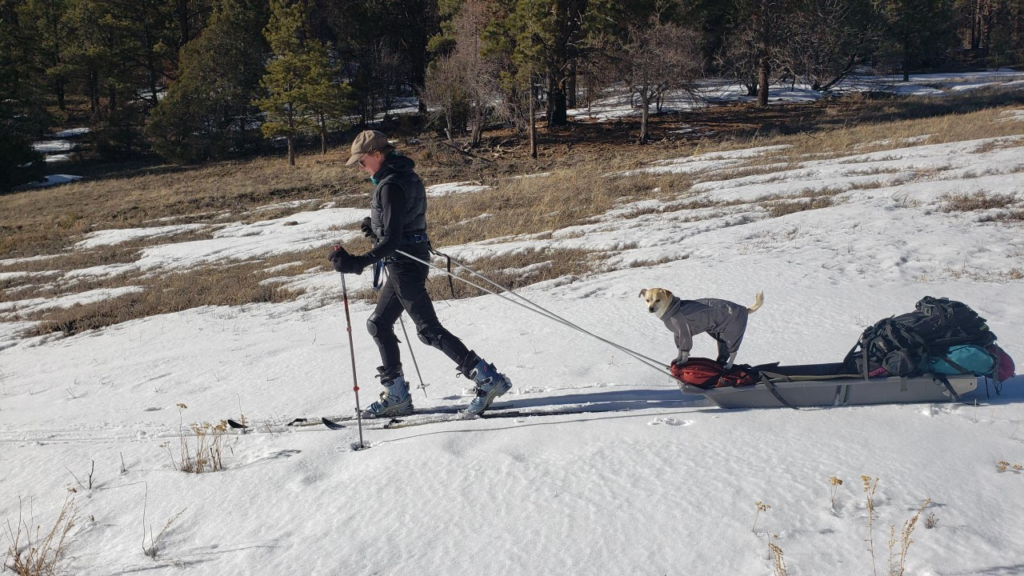
By evening I skijored in the surrounding mountains with AB, returning by moonlight. .
IMAG1875
AB feels comfortable in the woods, and I feel safe in the woods with her. It is only when she pulls up short, with her nose to the wind, that I stiffen. It is at these moments that a skier, alone in the dark with only his dog for company, can imagine, all too easily, something frightening. Although these were the same mountains that we had spent a week in during our Outward Bound Veterans Course the previous January (which I wrote about here), it only takes a small but noticeable hesitation on the part of AB to fill me with apprehension and dread.
“What is it, girl?” I would call out to her in these moments, in a voice filled with false confidence, at the same time taking a firm grip on my pole. After a moment of listening, it would often seem worse to remain still then to just press on ahead, no matter how blindly.
“Come on, it’s nothing, let’s go!” In this way we progressed through the snowy woods until we came upon the lights of camp.
Though the WFR training was hard, I made it through. I celebrated my completion of the training and my new certification by going up Monarch Mountain without climbing skins (because I didn’t have any). I herringboned my way to the top in a glassy stupor, pausing just long enough to shed layers as I overheated.
IMAG1903
Coming down on legs of jelly I was appreciative of my life-saving training. I had a detailed waterproof (and tear-resistant) manual with me and two flexible SAM splints in the event that something went awry (and which I still carry with me on even short trips.)
As fate would have it, it wasn’t on my own person that I would first test my WFR skills, but on somebody else. And as fate would have it, it would be on the very same mountain where my life almost ended–in fact within spitting distance of the very tree where I had come to rest, grievously stricken and hanging on by a thread.
The only thing that could have made the day more extraordinary is if the victim had been the same person that rescued me: a vacationing Spaniard from Trujillo who served in the Red Cross. (In this instance, the victim was an Argentinian vacationing with his girlfriend.)
The first news of the accident was communicated to me by a frantic woman gesturing wildly from the lift as she passed overhead.
“Somebody just flew into the woods by Tower 3. They need help! Help him! Help!”
Many things leapt through my mind in this instant. The first was absolute horror. I felt I was reliving my own near termination: a sudden inability to breathe, the thunderous pain  of a suddenly crumpled skeleton. The second was a sense of impossibility, that this couldn’t be happening to me, here, now, being called upon to help save someone in the same place that I had nearly died four years ago, someone who had also darted sparrow-like into a wood-filled oblivion.
I fought to suppress my immediate and overwhelming impulse to continue down the mountain and report the fall to the first aid station at the bottom of the hill, light up a cigarette, and just hope everything turned out okay for the guy.
But the thing of the thing was, I knew instantly that the right thing to do, the only thing to do, was to stop and render aid. What if the victim needed help in that very moment? What if an artery had been severed by a tree branch and they were bleeding out? What if I could rip the shirt from my body and create a pressure bandage? What if they were unconscious and vomiting and needed immediate assistance to keep from suffocating?
What if in the time it took for me to relay the emergency message to ski patrol, and for them to then dispatch someone to the scene, and for that person to figure out where they were supposed to go, etc. etc., something could have been done to save that person?
A life was at stake. That much was clear. And I was needed. I plunged into action, cartwheeling to a stop by the pair of lone skis just off to the side of Tower 3. The sight of the skis alone sent chills through my body. There was no one in sight and there were no tracks in the snow. He had evidently flown through the air into the woods, perhaps departing this world like a mad bird, like a doomed bird hurtling into a sliding glass door. I didn’t know how fast he had been coming, but fast enough that both skis had released nearly side by side. There was no time. In a single movement I released my bindings and kicked free of my skis.
I slipped down into the woodline frantically, knowing that somewhere in the shadowy darkness was a body, someone who could very well be broken and dying. There were no screams of pain or agony, no muffled stirrings. Nothing but silence and the sound of my boots scrambling to gain a hold on the slippery slope of ice and tree and rock. The only person screaming was myself, unconsciously, without thinking, as though it were somebody else in my body and not me: “MAN DOWN! MAN DOWN! MEDIC! MAN DOWN!” Between breaths I strove to listen, but there was nothing but a silence. It was the silence of true unabashed horror. A silence I knew well. Against my will I remembered my own fantastic agony, my own silence, unable to take in a single breath with my fractured sternum, unable to move a single fractured limb, unable to sob, unable to moan, unable to cast anything of myself about but my eyes, which were narrowed to tiny slits, the slightest of openings, which wanted only to escape my body, to escape everything, which had seen too much, envisioned too much, absorbed too much.
As I searched and scrambled over the rocky tree covered slope, I found myself in a delirium, preparing for the worst, and trying to shut the worst out of my mind. I could already see the body before me, limp and still, perhaps stabbed through the eye with a tree branch, through the brain, dead instantly, waiting only for me to squeeze my eyes against the sight of it and look away, turn insensible, collapse.
It may have only taken 10 or 15 seconds scrambling in the woods until I spotted the skier, but it felt like an eternity. When I reached his side I could see his face covered in blood, just as I had imagined. He was lying on his back at the base of a tree. I was relieved to see that he was conscious and appeared to be breathing. His eyes were open and moving around. But the sight of his bloody face and the gash to his forehead filled me with dread.
We had learned in WFR training that brain injuries are one of the most insidious and chilling injuries that you can ever come across, because their effects are deadly, and it is not always easy to diagnose them, even for professionals. For this reason, increased cranial pressure, or ICP, is often referred to as “parking lot death,” because the injured person may appear well enough to be released, but then keel over dead without warning just a short time later. ICP was the deadly and often quick build-up of pressure in the brain from head trauma, i.e. striking a tree at high speed with your head, doing a header into the woods, breaking a tree in half and being in turn quartered and splintered which is what could have happened to this guy, easily could have happened to this guy.
Because of his incoherence, and his inability to answer questions or take direction, and because I didn’t know with what velocity his head had been impacted, I immediately suspected the worst. Over and over he kept mumbling, “What is happening to me? Where is my girlfriend? Has my girlfriend been hurt?” I kept his head and neck stabilized against the uneven terrain, just as I had been trained, and did a blood sweep with my free hand to check for additional injury. I reassured him in his native tongue. I continued with my assessment. He kept asking the same questions. It was at this time that the first ski patrolman arrived on the scene.
He observed the steepness of the terrain and backed away, saying something about approaching us from a safer direction.
IMAG2232(To be continued)

Sandia Tram PA System: Half-Mast, Please

Sandia-Peak-Tram-Station-570x427

ATTENTION! ATTENTION! ALL HIKERS! ALL MOUNTAIN WALKERS! ALL MOUNTAIN DWELLERS! THE NEXT TRAM DEPARTS IN 15 MINUTES! ATTENTION! ATTENTION! MAY WE HAVE YOUR ATTENTION PLEASE! THE TRAM IS NOW BOARDING! THE TRAM IS CURRENTLY BOARDING AT THE TRAM TERMINAL! ATTENTION! ATTENTION! ALL MOUNTAIN WALKERS! ALL MOUNTAIN DWELLERS WITHIN A MILE RADIUS! ATTENTION! ATTENTION! THE TRAM IS NOW DEPARTING! NEXT TRAM DEPARTS IN 15 MINUTES! ATTENTION! ATTENTION!

Dear Sir or Madam:

Operation Skywalk is an annual memorial march in honor of Colonel Ted Westhusing (Nov. 17, 1960-June 5, 2005) that covers the length of the Sandia Mountains from Placitas to Tijeras along the Crest Trail. Participants include classmates of his from West Point ’83, members of his unit from Iraq, and general members of the public. Some of the participants, due to age or infirmity, will only be able to travel as far as the tram, and then will be taking the tram down the mountain. This year’s Skywalk will take place on Saturday, June 1. In honor of the somber aspect of the occasion, we would ask that you consider lowering the volume of your loudspeaker on this day. It is the primary complaint that I have received from our participants, that as they come within a mile of the tram, they hear the piercing and shrill announcements of your PA system shattering the peace of the mountain. Some of them have expressed an interest in stopping at the restaurant to fortify themselves for the next 16 miles of their journey, but have found the loudspeakers so unpleasant that they elect to just continue on without stopping. If you could manage to lower the volume to even half or a quarter of its current intensity, we would be much obliged. Thank you for your consideration in this matter.

Alex Limkin, Captain, U.S. Army, Ret., Skywalker

what ptsd is: by writer myke cole

http://mykecole.com/blog/2013/03/what-ptsd-is

Headshots of Myke Cole

I’ve talked before about genre writers who have been very open about per­sonal trials, par­tic­u­larly the kind of depression/anxiety con­di­tions that I feel are a nat­ural part of the uneven ter­rain all authors have to walk. I’ve always appre­ci­ated their will­ing­ness to go public with these issues, as the first (and false) thing that most people suf­fering from these sorts of things think is a.) that they’re alone and b.) the problem is unique to them. When your lit­erary heroes step into the spot­light and say, “hey, this is more normal than you think and you can figure out how to live with it,” well, let’s just say I wouldn’t be sur­prised if there are more than a few folks still pushing air past their teeth because of a blog post they read.

The thought of talking about what goes on in my head in any­thing but the most gen­eral terms in the public square takes me way out of my com­fort zone. But I reread the first para­graph of this post, espe­cially that last line. Some­times, you need to go out­side your com­fort zone, talk about a thing not because you need to get it off your chest, but because it might help others to hear it.

I was diag­nosed with PTSD in August of ’09, just after my third tour in Iraq. Of course my first con­cern (like everyone in my line of work) was losing my secu­rity clear­ance, and that kept me from going for help for a long time. But DoD did right by me, and I kept working for another 2 years before the book deal got me out of the business.

I had a hard time admit­ting it to myself. There was a cul­ture in my line of work, that PTSD was the province of the hard oper­a­tors, the door­kickers who got into 2–3 fire­fights every single day. Like most cul­tures, you bought into it silently, it was simply a thing that was, not worth ques­tioning any more than the law of gravity.

I mean, sure I’d sup­ported cer­tain spe­cial­ized units, sure I’d been to some funerals, sure there’d been some danger close indi­rect rounds. Sure I’d had some mis­giv­ings about what I was fighting for, what my actions were con­tributing to. But, I’d seen the ads onAFN, showing young men with gun­powder still on their hands, often fresh off the bat­tle­field, having trem­bling flash­backs of a fire­fight where their best friend went down right next to them.THAT was PTSD.

Except, it wasn’t.

I kept seeing non­profit TV spots, charity pieces and solemn psy­cho­an­a­lyt­ical essays. They all described a PTSD that I’d never seen in myself, and more impor­tantly, in anyone else I knew who suf­fered from it. I’ll never forget this one spot on AFN, where a sol­dier washes his hands, only to find blood pouring out of the faucet Stephen King’s Shining style. He hears gun­fire, looks into the mirror, the back­ground is a desert bat­tle­field strewn with corpses, glowing red.

I picked that apart with some friends for an hour. I’m not saying that there aren’t people out there for whom PTSD is like that, but it sure as hell wasn’t like that for any of us. As I thought about that spot, as I con­sid­ered the mounting reports of sui­cides, home­less vets, col­lapsing fam­i­lies, I began to get the uneasy feeling thatPTSD is a lot like autism: A thing iden­ti­fied, but poorly under­stood. I read about the sup­posed symp­toms, the height­ened alert­ness, the re-experiencing of spe­cific trauma, the going numb. It was all true. Up to a point.

When James Lowder invited me to write an essay for BEYONDTHE WALL, we started brain­storming what it would be about. After a few rounds of back and forth, I real­ized that I wanted to write about PTSD, and how I saw it man­i­festing in fan­tasy char­ac­ters. I used the Cooper Color System, talked about how living in the per­petual state of readi­ness known as “Con­di­tion Yellow,” both enfran­chised and hurt people. Con­stant vig­i­lance has its uses, but it is exhausting and, over time, transforming.

After the book was pub­lished I real­ized that I hadn’t gotten close enough to the issue. Arya Stark and Theon Greyjoy aren’t real people, and so addressing their PTSD was tack­ling the issue at a safe remove. It was a toe in the water. It wasn’t good enough.

Because the truth is, I’ve never heard anyone, med­ical pro­fes­sional, spir­i­tual leader or oth­er­wise describe the PTSD I know. What I see are people embracing a def­i­n­i­tion that explains PTSD using the vocab­u­lary of clas­sical pathology. It implies that, like a dis­ease, you can pre­scribe a course of treat­ment and fix it.

But, in my expe­ri­ence, PTSD doesn’t get fixed. That’s because it was never about get­ting shot at, or seeing people die. It was never the snap trauma, the quick moment of action that breaks a person.PTSD is the wages of a life spent in crisis, the slow, the­matic build that grad­u­ally changes the way the suf­ferer sees the world. You get boiled by heating the water one degree each hour. By the time you finally suc­cumb, you realize you had no idea it was get­ting hotter.

Because you kept adjusting.

Because PTSD isn’t a dis­ease, it’s a world view.

War, dis­aster response, police work, these things force a person to live in the spaces where trauma hap­pens, to spend most of their time there, until that world becomes yours, seeps through your skin and runs in your blood. Most of us in indus­tri­al­ized western soci­eties live with feeling that we are safe, that our lives are sin­gular, mean­ingful, that we are loved, that we matter. We know intel­lec­tu­ally that this may not be the case, but we don’t feel it.

PTSD is what hap­pens when all that is stripped away. It is the cur­tain pulled back, the deep and the­matic real­iza­tion that life is fun­gible, that death is capri­cious and sudden. That anyone’s life can be snuffed out or worse, ruined, in the space of a few sec­onds. It is the shaking real­iza­tion that love cannot pro­tect you, and even worse, that you cannot pro­tect those you love. It is the final sur­ren­dering of the myth that, if you are decent enough, eth­ical enough, skilled enough, you’ll be spared. The war­riors that the media ascribes so much power are the first to truly know pow­er­less­ness, as death becomes com­modi­tized, sta­tis­tics that you use to make an argu­ment for pro­mo­tion, or funding, or to score polit­ical points.

War­rior cults (and, heck, most reli­gions) were invented to give death meaning. Even if you look past the promise of immor­tality, they offer a tremor in the world, a ripple of sig­nif­i­cance in your passing. You do the right thing knowing that, some­where down the line, you have a mean­ingful death. PTSD is what hap­pens when you realize that you won’t, that your sur­vival will be deter­mined by some­thing as random as the moment you bent over to tie your shoelace.

Dis­eases are dis­crete things. But how do you treat a change in per­spec­tive? Joe Aber­crombie cap­tured it best in his descrip­tion of Ferro Maljinn’s final rev­e­la­tion of the world of demons just along­side our own. Once seen, the crea­tures cannot be unseen. When you’re quiet enough, you can hear them breathing.

Nobody talks about this. Nobody talks about the boredom, the impos­si­bility of finding meaning in 8 hours work in an air-conditioned office after you just spent months working 18 hours a day on a bat­tle­field where your touch altered his­tory. Nobody talks about the sur­real expe­ri­ence of trying to remember how you got excited about a book, or clothing, or even a car or house. On the bat­tle­field, in the burning building, the ground trem­bled, we felt our impact in every­thing we did, until the world seemed to ripple at our touch. Back home, or off shift, we are sud­denly the sub­ject of sym­pa­thetic glances, of silly, repet­i­tive ques­tions. The anonymity of the uni­form is nothing com­pared the anonymity of com­fort. We drown in it, cut off from what makes it worth­while for others, unable to carve out a piece of it for ourselves.

Time helps you to shift back, but you never shift back all the way. You develop the dreaded “cop’s eyes,” where you see the poten­tial threat around every corner, where you ask the waiter for the chair with its back to the wall. Where the trust essen­tial to build rela­tion­ships is com­pro­mised, because in the world you live in, every­body is trying to harm someone.

And this is why so many of us, even post diag­nosis, go back to work in the fields that exposed us to the trauma in the first place. Because the fear is bone deep, and the only thing that puts it to sleep is the thought that you can maybe patch a few of the holes in the swiss cheese net under the high wire. Because we are fright­ened from the moment we wake until the moment we sleep, and if we can stave that off for someone else, well, then maybe that’s some­thing to live for.

And that’s for those of us who get off easy. In the worst cases, people aren’t able to find meaning in a reg­ular job, or in wealth-building, or rela­tion­ships, or any of the things that modern soci­eties tell us charts the course of a life. These are the people thatPTSD takes, as they flail their way into sui­cide, or crime, or insanity, des­per­ately trying to carve meaning out of a world where all the goal posts have sud­denly moved, where the giant ques­tion that no one can answer is, “why bother?”

The root of the treat­ment has to come from meeting those who suffer where they are. It isn’t just hard oper­a­tors. It’s clerks and phle­botomists and chem­ical engi­neers. It’s people who thought they were fine, only to wake up one morning and realize that the last few years have changed them in ways they don’t quite under­stand. It isn’t just sol­diers and cops and ER nurses. Life in poverty can bring on PTSD. An abu­sive parent can have the same effect.

We need to treat the fear, address the world view, acknowl­edging that these aren’t things you cure, maybe aren’t even things you change. We need to tip our hat to the trauma, and look instead at what the life after it looks like. We have to find a way to con­struct sig­nif­i­cance, to help a changed person forge a path in a world that hasn’t changed along with them.

And if you’re a vet, or an EMT, or a cop, or fire­fighter and you’re reading this, I want you to know that you can’t put the cur­tain back, but it’s pos­sible to build ways to move for­ward, to find alter­na­tives to the rush of crisis. There are ways you can matter. There is a way to rejoin the dust of the world, to find your own space on the dance floor.

I know this.

Because I did it, am still doing it, every day.

Don’t give up.

Last Letter from Dying Veteran to Bush and Cheney

Published in Truthdig.com

Photo by Claudia Cuellar

Tomas Young                            - Photo by Claudia Cuellar

To: George W. Bush and Dick Cheney
From: Tomas Young

I write this letter on the 10th anniversary of the Iraq War on behalf of my fellow Iraq War veterans. I write this letter on behalf of the 4,488 soldiers and Marines who died in Iraq. I write this letter on behalf of the hundreds of thousands of veterans who have been wounded and on behalf of those whose wounds, physical and psychological, have destroyed their lives. I am one of those gravely wounded. I was paralyzed in an insurgent ambush in 2004 in Sadr City. My life is coming to an end. I am living under hospice care.

I write this letter on behalf of husbands and wives who have lost spouses, on behalf of children who have lost a parent, on behalf of the fathers and mothers who have lost sons and daughters and on behalf of those who care for the many thousands of my fellow veterans who have brain injuries. I write this letter on behalf of those veterans whose trauma and self-revulsion for what they have witnessed, endured and done in Iraq have led to suicide and on behalf of the active-duty soldiers and Marines who commit, on average, a suicide a day. I write this letter on behalf of the some 1 million Iraqi dead and on behalf of the countless Iraqi wounded. I write this letter on behalf of us all—the human detritus your war has left behind, those who will spend their lives in unending pain and grief.

I write this letter, my last letter, to you, Mr. Bush and Mr. Cheney. I write not because I think you grasp the terrible human and moral consequences of your lies, manipulation and thirst for wealth and power. I write this letter because, before my own death, I want to make it clear that I, and hundreds of thousands of my fellow veterans, along with millions of my fellow citizens, along with hundreds of millions more in Iraq and the Middle East, know fully who you are and what you have done. You may evade justice but in our eyes you are each guilty of egregious war crimes, of plunder and, finally, of murder, including the murder of thousands of young Americans—my fellow veterans—whose future you stole.

Your positions authority, your millions of dollars of personal wealth, your public relations consultants, your privilege and your power cannot mask the hollowness of your character. You sent us to fight and die in Iraq after you, Mr. Cheney, dodged the draft in Vietnam, and you, Mr. Bush, went AWOL from your National Guard unit. Your cowardice and selfishness were established decades ago. You were not willing to risk yourselves for our nation but you sent hundreds of thousands of young men and women to be sacrificed in a senseless war with no more thought than it takes to put out the garbage.

I joined the Army two days after the 9/11 attacks. I joined the Army because our country had been attacked. I wanted to strike back at those who had killed some 3,000 of my fellow citizens. I did not join the Army to go to Iraq, a country that had no part in the September 2001 attacks and did not pose a threat to its neighbors, much less to the United States. I did not join the Army to “liberate” Iraqis or to shut down mythical weapons-of-mass-destruction facilities or to implant what you cynically called “democracy” in Baghdad and the Middle East. I did not join the Army to rebuild Iraq, which at the time you told us could be paid for by Iraq’s oil revenues. Instead, this war has cost the United States over $3 trillion. I especially did not join the Army to carry out pre-emptive war. Pre-emptive war is illegal under international law. And as a soldier in Iraq I was, I now know, abetting your idiocy and your crimes. The Iraq War is the largest strategic blunder in U.S. history. It obliterated the balance of power in the Middle East. It installed a corrupt and brutal pro-Iranian government in Baghdad, one cemented in power through the use of torture, death squads and terror. And it has left Iran as the dominant force in the region. On every level—moral, strategic, military and economic—Iraq was a failure. And it was you, Mr. Bush and Mr. Cheney, who started this war. It is you who should pay the consequences.

I would not be writing this letter if I had been wounded fighting in Afghanistan against those forces that carried out the attacks of 9/11. Had I been wounded there I would still be miserable because of my physical deterioration and imminent death, but I would at least have the comfort of knowing that my injuries were a consequence of my own decision to defend the country I love. I would not have to lie in my bed, my body filled with painkillers, my life ebbing away, and deal with the fact that hundreds of thousands of human beings, including children, including myself, were sacrificed by you for little more than the greed of oil companies, for your alliance with the oil sheiks in Saudi Arabia, and your insane visions of empire.

I have, like many other disabled veterans, suffered from the inadequate and often inept care provided by the Veterans Administration. I have, like many other disabled veterans, come to realize that our mental and physical wounds are of no interest to you, perhaps of no interest to any politician. We were used. We were betrayed. And we have been abandoned. You, Mr. Bush, make much pretense of being a Christian. But isn’t lying a sin? Isn’t murder a sin? Aren’t theft and selfish ambition sins? I am not a Christian. But I believe in the Christian ideal. I believe that what you do to the least of your brothers you finally do to yourself, to your own soul.

My day of reckoning is upon me. Yours will come. I hope you will be put on trial. But mostly I hope, for your sakes, that you find the moral courage to face what you have done to me and to many, many others who deserved to live. I hope that before your time on earth ends, as mine is now ending, you will find the strength of character to stand before the American public and the world, and in particular the Iraqi people, and beg for forgiveness.

Sick of Killing: a squirrel’s death in the mountains

REPRINTED FROM THE ALIBI

BY ALEX E. LIMKIN

i was driving in the mountains at dawn. there were spots of ice and snow. i spotted two dark lumps in the road that looked like chunks of ice that had fallen off the bottom of a truck. i slowed down. then the chunks moved, just slightly, and i realized, now less than 50m away, that the chunks of ice were in fact a pair of squirrels. there wasn’t much time. first i went right, then left, then winced as i heard the cha-chunk sound beneath the car. i continued driving. i had a destination. what was i going to do for a dead squirrel? road kill is just a reality of our roadways. but it didn’t feel right, to just continue. this forest, this road, was their home. after about a half mile i realized i had to turn around and go back. what was i going to do? i didn’t know. if the squirrel was mangled but not dead i could kill it, put it out of its misery. then i saw the little body at the edge of the road. it was not flattened. i half expected it to jerk back to life. i parked and went over. i squatted in the road and took the squirrel in my hands. i cradled its body. still warm. it was black with a white tail and had brown stains on its two front teeth, like it smoked heavily and drank black tea. i hoped death had been immediate. i’m sorry i said. i couldn’t leave him in the road, to be run over again and again, becoming part of the asphalt, so i took him to a tree at the road’s edge. in a natural depression that had formed at the base of the tree, i laid him down and curled his tail over his head as though he were sleeping. then i got back in the car and drove off. it was harder that there had been two of them together. i was left to wonder: were they mates, family? did it matter? i came into the squirrels’ home and killed them. it got me thinking about coming back from iraq. i was seeing a va doctor. i was living like a recluse and had a mouse problem in my century old house. they found their way into drawers. they found their way into the insulation in the back of the oven. i found their little droppings around which enraged me. i had to do something. it took me a while to act. finally i set a trap in one of the drawers baited with cheese. nothing for several days. then one morning, i opened the drawer to the sight of a dead mouse. dead in my trap. i began to shake all over, the sight of its crushed neck, its little teeth. i shook all over. i’m sorry i said. i’m sorry. over and over and over again. and i wept. i told the va doctor. he said the mice, they’re like an insurgency, it’s like you’re fighting an insurgency in your very house. he wasn’t trying to be funny, he was just trying to help me understand my reaction. i thought of this while driving up the road. i thought of what it is like to go into someone’s home, someone’s country, and kill them, and how you feel afterward. i thought of what it is like to hold a still warm body in your hands that will never move again. i thought of why i walk the length of the sandia mountains on the anniversary of westhusing’s death. am i still trying to carry his body, to carry all the bodies? is this not why i climb alone in the mountains, so i can carry the bodies like i held the black squirrel, looking down at its brown stained teeth and beautiful black fur? i told myself i would stop and move the squirrel to a site away from the road. and then i tried to stop thinking about it. i tried not to think about it as i parked my car and got out and started climbing. at some point i was able to forget. maybe i started thinking about some new gear i needed for the mountains. crampons or a snow shovel. who knows. i managed to forget. that is what the mountains do for me. the weather was warm. despite the snow and middle of winter i could climb without any fleece, without any layer at all. just in my bare skin. i was forgetting everything climbing in the sun. several hours later, heading down the mountain, i remembered what had happened, and what it had been like to hold a body in my hands, and i remembered that after iraq, i hadn’t ever wanted to stop, couldn’t bear to stop, couldn’t bear to look back. if you looked back, if you paused, you would get hit by a truck. then i got hit by a truck. doctors put me back together with screws and rods and chains. i parked the car in the same spot and went to the tree. i took the squirrel’s body in my hands and looked up the hill for a suitable resting spot. my eyes settled on a jagged stump about 7 feet tall and not easily reached. i clambered through the snow up the hillside. when i raised him up he was backlit by the sun. his tail glowed like silver filaments. i am sorry, i said. i am sorry. i am sorry. i am sorry.

After Protests, Military May Nix Proposed Drone Warfare Medal

From U.S. Department of Defense

By Amaani Lyle
American Forces Press Service

WASHINGTON, March 12, 2013 – In light of recent discussions concerning the new Distinguished Warfare Medal and its order of precedence relative to other military decorations, Defense Secretary Chuck Hagel has ordered a review of the award, Pentagon Press Secretary George Little said here today.

Little said Hagel directed Army Gen. Martin E. Dempsey, chairman of the Joint Chiefs of Staff, to conduct the review and expects to make a decision about the medal’s fate after assessing the findings.

“Secretary Hagel consulted with the chairman, the Joint Chiefs and the service secretaries and knows that the decision to establish the medal was carefully and thoroughly analyzed within the Department of Defense,” Little said.

Opponents of the medal question the hierarchy of technology-driven warfare such as unmanned aerial vehicles, unmanned underwater vehicles, missile defense and cyber capabilities, as the operators may not be anywhere near a combat zone.

“Production of the medal has stopped,” Little said, adding that there are so far no nominations for it, allowing time to make a final decision.

Little noted that the secretary has a long history of involvement and membership with veteran service organizations, including a stint as head of the USO.

“He’s heard their concerns, he’s heard the concerns of others, and he believes that it’s prudent to take into account those concerns and conduct this review,” Little said. “His style as a leader is to be [decisive] and also to be a ready listener.”

An American Warrior: The honorable life and untimely death of Colonel Ted Westhusing

FROM EMORY MAGAZINE

By Mary J. Loftus

“An atmosphere of trust . . . where guile is minimized, if not eliminated, is a requirement for excellence internal to the warfighting unit.” —Ted Westhusing, Journal of Military Ethics

Already a lieutenant colonel in the army when he came to Emory, Ted Westhusing 03PhD used to jog around campus with his backpack filled with bricks so he wouldn’t “get soft.” An honor graduate of West Point, he was fluent in Russian and classical Greek, and was working toward a doctorate of philosophy with an emphasis on military ethics.

“There are so many good stories about Teddy,” says his thesis adviser, Professor of Philosophy Nicholas Fotion. “Most people, it takes them two years to write their dissertation. It took him from September to April. He was such a dedicated, well-organized guy. He would say—he used military lingo, even to describe his academic work—that he was on a mission.”

Westhusing set and pursued goals with a hard-driving dedication, apparent even at a young age. One of seven children, he was born in Dallas on November 17, 1960, and grew up in Tulsa, where he was starting point guard on his high school’s basketball team, often going to school early to practice his jump shot. As a National Merit Scholar, Westhusing had his choice of colleges, and decided on the United States Military Academy at West Point.

A devout Catholic, he thrived in an environment that emphasized integrity, virtue, and self-discipline. He served on the Cadet Honor Committee as senior honor captain, enforcing the code that a cadet “will not lie, cheat, steal, or tolerate those who do,” and graduated third in his class in 1983. Westhusing’s father had served in the navy, and his grandfather in the army during World War II; he had his mind set on following them into military service.

After graduation, he became a platoon leader, received Special Forces training, and was stationed in Italy, South Korea, and Honduras. He met his wife, Michelle, through a mutual friend while he was overseas, and they wrote letters back and forth for three and a half years, sweetly courting during his furloughs.

“My friends tease me that the first time we met, it was like something out of Romeo and Juliet,” Michelle says. “I was in my apartment in Memphis, and he came walking up to my balcony, this jarhead guy with no hair and flowers. He had this smile, and I hugged him and said, It’s so nice to finally meet you. We went to the barbecue festival down at the river, and lunch turned into dinner, and then he was going to Honduras for six months. But he wrote really good letters. He was so different than anyone I had ever dated, and so genuine.”

Westhusing returned to the states and became division operations officer for the Eighty-Second Airborne based at Fort Bragg, North Carolina. He and Michelle married in 1988.

He enjoyed the camaraderie of military service, but missed the intellectual rigor of a university. In 2000, he enrolled in Emory’s graduate school, moving with Michelle and their three young children—ten-year-old Sarah, five-year-old Aaron, and one-year-old Anthony—to Atlanta.

“Emory was the only school with the emphasis on military ethics and the ancients that Ted was looking for,” Michelle says. “He took it and applied it to his daily life by the code of honor he learned at West Point.”

“Competition and cooperation are often in conflict . . . and the bridge between the two is honor.” —Ted Westhusing’s doctoral dissertation

Westhusing’s dissertation was titled, “The Competitive and Cooperative Aretai within the American Warfighting Ethos,” with aretai, from the Greek, meaning virtues or excellences.

“Born to be a warrior, I desire these answers not just for philosophical reasons, but for self-knowledge,” he wrote in the opening to the 352-page exploration of military honor.

A student at Emory at the time, Jeff Jackson 04C, remembers asking Westhusing for advice about joining the military after taking a class the lieutenant colonel cotaught. Jackson went on to serve in Afghanistan with the Army Reserves. Westhusing, he says, was “a very upbeat guy, a rarity among philosophy types.”

After completing his doctorate, Westhusing returned to West Point to teach English and philosophy, and Michelle and the children settled into life on the scenic, historic campus, which runs along the Hudson River in New York. He was offered a lifetime assignment as a professor and seemed to enjoy the role of preparing young officers-in-training.

“I will never forget the lessons [Westhusing] taught me. As a cadet in his philosophy class, he forged an understanding of right and wrong—the harder right, over the easier wrong,” wrote Carlos Keith, a 1996 graduate of West Point, on an alumni website.

But Westhusing found it hard to be in a classroom when the country he loved was a year into a conflict that he strongly supported, considering the Iraq War a “just war” in the ancient, Augustinian sense of the term—a war that occurs for a good and just purpose rather than for self-gain or power, waged by a proper authority, using no more force than necessary, with peace as the ultimate goal.

Serving in Iraq, Westhusing told friends, would help him be a better professor to cadets who might be facing service there or in Afghanistan.

The person most difficult to convince, however, was Michelle. “It was one of the biggest arguments we ever had,” she says, when she discovered he had volunteered for duty in fall 2004. “We had three kids, he was a professor. I couldn’t understand it.”

“In the minds of friend and foe alike, our army is, without a doubt, the best-trained, best-equipped, best-led, and most intelligent of any in our nation’s history. Our soldiers are recognized as the world’s finest.” —Ted Westhusing, editorial in the Tulsa Tribune during Gulf War I.

But Westhusing wouldn’t be dissuaded. After a few weeks of training at Fort Benning, at age forty-four, he was on his way to Baghdad to help train Iraqi forces to take charge of their own security. As head of counterterrorism and special operations for the Multinational Security Transition Command, he worked in partnership with a private US security company contracted to train an elite group of Iraqi police in special operations.

Westhusing reported to Major General Joseph Fil and Lieutenant General David Petraeus, a fellow West Point graduate who was then in charge of operations in northern Iraq. Petraeus was widely known for his ability to inspire his troops and gain the trust of the Iraqis; helping to rebuild Iraq and train their own forces was an important part of his strategy. Millions of dollars from the US, much of it in cash, were being used to stimulate the local economy, support public works, and pay private contractors.

At first, Westhusing’s correspondence indicated he was excited to be in Iraq, and his commanders commended his performance; Petraeus soon promoted him to full colonel.

But within a few months, the situation, and Westhusing’s state of mind, had started to deteriorate. In May, Westhusing received an anonymous letter claiming that there was rampant fraud, waste, and abuse of power in the private company he oversaw.

“Their only goal is to make as much money as they can, doing as little work as possible,” read the letter, now publicly available under the Freedom of Information Act.

Westhusing sent the allegations to Fil, saying he had reviewed the alleged discrepancies and found that the company was complying with its contractual obligations, and that “the evidence suggests that these allegations are untrue.”

But his emails home were filled with disillusionment—about contractors, the money changing hands, and infighting among the Iraqis they were training. He began to lose sleep, grew physically ill, and told Michelle that he thought he might have to resign his position.

“Trust was very important to Ted. And in the last conversation I had with him, he said he was having trouble trusting anyone,” she says. “He couldn’t trust the Iraqi police force, the contractors, even his commanders. He was in a place far away from home, by himself, and he felt very isolated. He felt like he had lost control over the whole, hopeless situation.”

“Death before being dishonored anymore.” —from a note found beside Ted Westhusing’s body

On June 5, 2005, Ted Westhusing was found dead in a trailer at Camp Dublin in Baghdad, his service pistol on his bed along with a letter indicating that he had taken his own life. “I cannot support a msn [mission] that leads to corruption, human rights abuse, and liars. I am sullied—no more,” it read in part. “I didn’t volunteer to support corrupt, money grubbing contractors, nor work for commanders only interested in themselves. I came to serve honorably and feel dishonored. . . . Death before being dishonored anymore.”

The letter, says Michelle, was in her husband’s handwriting. An official inquiry declared his death a suicide. Westhusing was the highest-ranking military official to have died in Iraq at the time, and the story received widespread media coverage, especially after documents and interviews associated with the investigation were released under the Freedom of Information Act.

But many unanswered questions remain for Michelle, who now lives a quiet suburban life with her eleven- and fifteen-year-old sons (her daughter is away at college).

“Ted very much believed in honor and doing the right thing. I think he was told not to worry about things, to sweep them under the carpet and go home,” says Michelle. “But Ted couldn’t do that. He wasn’t just a professor of ethics, he didn’t just teach it, he believed it with all his heart.”

Fotion also had stayed in contact with Westhusing. “I had no clue that this was going to happen,” he says. “The last email I got from him was a week before he died. He said he’d be going home in a month or so. He hid it from me, but I gather his emails to his family were more honest.”

His former student had a strong sense of morality, says Fotion, that could have been challenged when “things ended up seeming so dirty to him there,” he says. “Ethics can be a brittle shell, and when that broke . . . well, I want to believe it was not a suicide. It breaks my heart for his kids and his wife.”

Veteran Dan Cantey is a graduate student in Emory’s Department of Religion who, while he never knew Westhusing, also served in Iraq and shares an interest in the classics and the ancient notion of just war. “You know, Book Nine of The Iliad is about Achilles—his friends go to him and say, we need you to come back and fight, and he gives a long speech asking basically, am I going to go back and seek the glory of war or go home?”

For his part, “I had no expectations about war being all glory, but I had very few qualms about going over there,” Cantey says. “The imbalance of power was between a tyrannical government and its people, and I’m glad we tried to put a stop to that.

“But I would also be naive to say that I was unstained by it,” he adds. “Going to war, in general, changes you in ways that you don’t understand.”

“Two fates bear me on to the day of death. / If I hold out here and I lay siege to Troy / My journey home is gone, but my glory never dies.” —Achilles, The Iliad, Book 9

Westhusing’s funeral service and burial at West Point were attended by generals Fil and Petraeus, who returned from Iraq for the ceremony, as well as several other generals of two stars or more. Looking back on it, Michelle would just as soon his commanding officers not have been present. “I feel like they let him down,” she says. “I feel as if no one was watching out for Ted’s welfare. He was trying to tell them something, and they ignored him. I can only imagine how that felt to him.”

Since the wars in Afghanistan and Iraq, suicide rates among American troops have risen steadily to the highest levels in nearly three decades. In 2004, the army reported that 67 soldiers on active duty committed suicide; in 2009, that number was 162. Officials say primary causes are longer deployments to war zones, depression, and stress.

The strength of Westhusing’s aretai, however, has been carried forth. A memorial at Emory, organized by Fotion, was held for Westhusing in September 2005 in the philosophy seminar room in Bowden Hall and was well attended. “Everyone told Teddy stories,” Fotion says, smiling at the memory. “I bound them up in a book and sent them to his wife.”

One of Westhusing’s West Point classmates, D. Richard Tucker, has written a one-act play about Westhusing’s death called Duty, Honor, Profit: One Man’s Struggle with the War in Iraq, which was performed in Seattle in 2008 during six weekends.

“I knew Ted briefly, I had one class with him,” says Tucker. “I mainly knew him by reputation. He was the star of the class. When I saw the news story on the Internet, I couldn’t believe it. It hit me hard. Two years later, when the FOI documents were released, I decided to write the play.”

“What made Ted unique among men is that he was exactly as he intended to be: ethical and moral beyond measure, forthright in all his dealings, always questioning.” —Tom Weikert, writing on West-Point.org, in remembrance of Ted Westhusing

Classmates and colleagues continue to pay homage to Westhusing on a memorial site at west-point.org.

Reads one: “At this, the fifth anniversary of his death, is appropriate to remember all that Ted was . . . for what made Ted unique among men is that he was exactly as he intended to be. Ethical and moral beyond measure, forthright in all his dealings, always questioning—Ted was the very conscience of our class.”

Another: “We all were very interested in Ted’s projects with the Trojan War and the Discovery Channel documentary, and he recommended that we read The Iliad and Odyssey and picked out what he thought were the best translations.”

And another: “I remember Ted best as captain of the honor committee. In many ways the Honor Code epitomizes West Point, and Ted certainly epitomized the Honor Code. I think if you had to tell someone what a West Pointer is supposed to be like, you couldn’t do much better than to start describing Ted.”

The remembrances continue: Westhusing effortlessly leading a rifle platoon, reading Kant, perfecting his Russian and Italian, rocking out to Bruce Springsteen.

But perhaps Westhusing’s most poignant living memorial, on this chilly fall evening just before Thanksgiving, is the gangly fifteen-year-old warming up before a basketball game in his high school gymnasium.

He’s laughing, joking with his teammates, rolling the basketball effortlessly between his hands and behind his back.

And when he catches the ball and goes up for a jump shot, it looks like he’s flying.

“Just like Ted,” says Michelle, watching her son play. “He looks just like Ted when he does that.”